
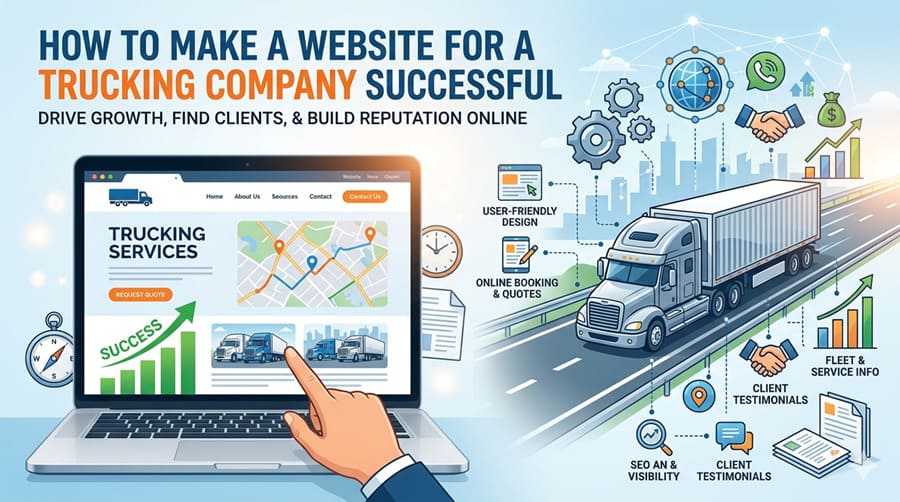
So, you want to know how to make a website for a trucking company successful? It’s not just about having a website; it’s about making it work for you. Think of it like getting a truck ready for a long haul – you need the right setup, clear directions, and regular check-ups. This guide will break down the steps, from picking the right tools to keeping things running smoothly. We’ll cover what makes a trucking site stand out and how to get it noticed. Let’s get your trucking business rolling online.
Key Takeaways
- Define your website’s main goal and who you’re trying to reach, whether it’s potential clients or new drivers.
- Choose a simple website builder, a good domain name, and hosting to get your site up and running professionally.
- Make sure your site looks good and works well on phones, and use clear navigation so visitors can find what they need easily.
- Get your website seen by using search engine optimization (SEO), social media, and maybe some paid ads.
- Keep your website fresh with updated information and check how it’s performing using analytics tools.
Define Your Trucking Website’s Purpose and Audience
Before you even think about picking a color scheme or writing your “About Us” page, you need to get clear on why you’re building this website in the first place and who you’re trying to reach. Without a clear purpose, your website will likely wander aimlessly, failing to connect with the right people.
Identify Your Business Goals Online
What do you actually want your website to do for your trucking business? Is it to get more calls for quotes? To attract new drivers to your fleet? Maybe it’s about building brand recognition so people think of you first when they need shipping services. Think about what success looks like online.
Here are some common goals:
- Lead Generation: Getting potential clients to contact you for services.
- Recruitment: Attracting qualified drivers and staff.
- Brand Building: Establishing your company’s reputation and trustworthiness.
- Information Hub: Providing details about your services, routes, and company history.
Determine Your Target Audience
Who are you talking to when people visit your site? Are you trying to impress a large corporation looking for a reliable logistics partner, or are you trying to reach independent owner-operators looking for a carrier to work with? Knowing your audience helps you tailor your message and design.
Consider these groups:
- Potential Clients: Businesses needing freight transportation.
- Prospective Employees: Truck drivers, dispatchers, mechanics, and administrative staff.
- Industry Partners: Other logistics companies, suppliers, or brokers.
Understand the Benefits of a Trucking Website
Having a professional online presence is no longer optional; it’s a necessity. A well-built website acts as your digital storefront, available 24/7. It’s where potential customers and employees will go to learn about you. A good site can help you stand out from the competition, showcase your professionalism, and make it easier for people to do business with you. It’s a powerful tool for growth and credibility in the trucking industry. Think of it as your most reliable employee, always working to bring in new business and talent. A website can really help you build customer trust and show you’re a legitimate operation.
A website is your company’s digital handshake. It’s often the first impression someone gets, so making it professional, informative, and easy to use is key to making a good start.
Now that you understand the importance of defining your purpose and audience, take a moment to clearly write down your primary goals for your trucking website. What do you want it to achieve?
Build a Professional and User-Friendly Trucking Website
Getting your trucking company online means building a website that looks good and works well for everyone who visits. This isn’t just about having a digital presence; it’s about making a strong first impression and making it easy for potential clients or drivers to find what they need. A well-built site can really set you apart.
Choose a Reliable Website Builder
When you’re starting out, picking the right tool to build your site is a big deal. You don’t need to be a tech wizard to create something that looks professional. Many website builders are designed to be user-friendly, letting you drag and drop elements to put your site together. Think about what features are important for your business. Some builders are better for simple sites, while others offer more advanced options. The goal is to find a platform that makes the building process straightforward and lets you focus on your trucking business.
Select a Memorable Domain Name and Hosting
Your domain name is your address on the internet. It should be easy to remember and related to your business. Aim for something short, ideally between 10-15 characters. Including your company name or keywords like “truck” or “logistics” can help. For example, a name like “Robertson Truck Group” might work well. Don’t forget about hosting. This is where your website’s files live. Reliable hosting means your site will be available when people try to visit it. Many website builders offer hosting as part of their package, which can simplify things.
Design with Customizable Templates
Most website builders offer templates, which are pre-designed layouts you can adapt. Think of them as a starting point. You can find templates specifically for service businesses or transportation companies. Look for one that has a good structure and includes common pages like a services list and a contact form. The best part is you can customize these templates to match your brand. This means changing colors, fonts, and adding your own logo. It’s about making the template your own and reflecting your company’s identity.
Incorporate High-Quality Visuals and Branding
People respond well to good visuals. Use clear, high-quality photos and videos that show your trucks, your team, or your operations. This helps build trust and shows potential customers what you do. Your logo should be prominent, usually in the header of your site. Consistent branding, using your company’s colors and fonts throughout the site, makes it look polished and professional. It all adds up to a better user experience and a stronger brand image for your trucking company.
Here’s a quick look at what to consider:
- Logo: Make sure it’s clear and visible.
- Color Scheme: Use colors that match your brand.
- Fonts: Choose readable fonts for all text.
- Images/Videos: Use professional, relevant media.
A professional website design for a trucking company should balance a clean, modern look with practical functionality. It needs to be easy for visitors to find information about your services, get in touch, and understand why they should choose you over competitors. This is where thoughtful website design trucking company choices really pay off.
Consider investing in professional design services or at least a high-quality template to ensure your website makes the best possible first impression.
Ready to make your trucking website shine? Visit Split Reef’s trucking company website design services page to learn more about professional design services that can elevate your online presence.
Optimize Your Trucking Website for Search Engines
Making a website for your trucking company is a great first step, but if no one can find it, what’s the point? That’s where search engine optimization, or SEO, comes in. Think of SEO as making your website speak the language that search engines like Google understand. The better it speaks that language, the higher it will show up when potential customers search for services you offer. It’s not just about looking good; it’s about being discoverable.
Implement Search Engine Optimization (SEO) Strategies
Getting your site noticed starts with a solid SEO plan. This isn’t a one-time fix; it’s an ongoing process. You need to figure out what terms people are actually typing into Google when they need trucking services. Are they looking for “local freight shipping” or “long-haul trucking company”? Doing some keyword research helps you understand this. Once you know the terms, you weave them naturally into your website’s content – think page titles, headings, and descriptions. Don’t just stuff them in there, though; it needs to read well for humans too.
Also, don’t forget about your images. Search engines can’t
Enhance User Experience with Clear Navigation and Content
Structure Your Website Navigation Logically
Think of your website’s navigation like the road signs for your customers. If they can’t find where they’re going easily, they’ll get frustrated and might just turn around. You want to make it super simple for people to find the information they need, whether that’s your services, contact details, or pricing.
- Keep your main menu clean: Only put the most important links there. Too many choices can be overwhelming. Think about what a potential customer absolutely needs to see first.
- Use clear labels: Instead of vague terms, use straightforward names for your pages like “Our Services,” “Get a Quote,” or “About Us.”
- Link your logo to the homepage: This is a standard practice that users expect. It gives them a quick way to get back to the start if they get lost.
A well-organized site helps visitors achieve their goals quickly. This means checking that all links work and the path to information is obvious.
Showcase Services and Build Customer Trust
Your website is your digital storefront. It needs to clearly show what you do and why people should choose you. This is where you build confidence with potential clients.
- Detail your services: Don’t just list them; explain what each service entails and the benefits for the customer. For example, if you offer LTL shipping, explain what that means and who it’s best for.
- Add testimonials: Real feedback from happy customers is gold. Display quotes or even short video clips from clients who have had a great experience with your company. This is a powerful way to show you’re dependable.
- Showcase credentials: If you have certifications, awards, or special licenses, put them on display. This adds a layer of professionalism and reassures visitors that you’re a legitimate and capable business.
Create an Employment Page for Recruitment
Finding good drivers and staff is tough in the trucking industry. An employment page on your website can be a big help in attracting the right people.
- List open positions: Clearly state the jobs you’re hiring for, including details about the role and responsibilities.
- Explain the application process: Make it easy for interested candidates to know how to apply, whether it’s through an online form or by sending an email.
- Highlight company culture: Use this page to talk about what it’s like to work for your company. Mention benefits, values, and why your business is a good place to build a career. This can help attract candidates who are a good fit for your team.
Prioritize optimizing your site for user experience by ensuring intuitive navigation and valuable, easy-to-find content.
Need expert help with SEO and website design for your trucking company? Visit Split Reef’ to get started.
Promote Your Trucking Business Online
So, you’ve built a great website for your trucking company. That’s awesome! But just having a website isn’t enough, right? You need people to actually find it and use it. Think of it like having a brand new truck parked in your driveway – it’s no good if no one knows it’s there or where it’s going. We need to get the word out there.
Leverage SEO for Long-Term Visibility
We’ve already talked about setting up your website with search engines in mind. Now, it’s time to keep that momentum going. Search Engine Optimization, or SEO, isn’t a one-and-done thing. It’s more like regular maintenance for your online presence. Keep researching what terms people are actually typing into Google when they need trucking services. Starting a blog on your website is a fantastic way to do this. You can write about industry news, tips for shippers, or even company updates. This not only gives search engines more content to find but also shows your customers you know your stuff. It’s all about making sure your company pops up when someone searches for “reliable freight services” or “local trucking solutions.”
Engage Through Social Media Marketing
Social media is where a lot of conversations happen these days. You don’t have to be on every single platform, but picking a couple where your potential clients hang out makes sense. LinkedIn is great for connecting with other businesses, while Facebook can be good for broader reach. Share photos of your fleet, post updates about successful deliveries, or even share interesting facts about the trucking industry. Building a consistent presence helps people recognize and trust your brand. It’s a way to show the human side of your business and connect with people on a more personal level.
Utilize Email Marketing Campaigns
Email is still a really direct way to talk to people. If someone has used your services before, or even just signed up for updates on your website, an email list is gold. You can send out newsletters with company news, special offers for returning customers, or even just helpful tips related to logistics. It’s a good way to keep your business top-of-mind without being pushy. Think about sending a welcome email with a small discount for new sign-ups, or a holiday greeting to your existing clients. It shows you care about keeping those relationships strong.
Invest in Paid Advertising Strategies
Sometimes, you need a little boost to get seen faster. Paid ads, like those on Google or social media platforms, can get your message in front of a very specific audience. You can target people based on their location, interests, or even what they’ve searched for online. While it costs money, it can bring in customers more quickly than waiting for organic traffic to build up. It’s worth looking into if you have a specific promotion or service you want to highlight. You can track what works and what doesn’t, so you can spend your advertising budget more wisely over time. For example, running a targeted ad campaign for refrigerated transport services could bring in specific leads.
A professional website design for a trucking company should balance a clean, modern look with practical functionality. It needs to be easy for visitors to find information about your services, get in touch, and understand why they should choose you over competitors. This is where thoughtful website design trucking company choices really pay off.
Explore various online promotion strategies to ensure your trucking business reaches its target audience effectively.
Maintain and Update Your Trucking Website
So, you’ve built this awesome website for your trucking company. Great job! But here’s the thing: a website isn’t a ‘set it and forget it’ kind of deal. Think of it more like keeping one of your trucks running smoothly. You wouldn’t just drive it until it breaks down, right? Same goes for your online presence.
Regularly Update Content and Information
This is pretty straightforward. Your company’s services, contact details, maybe even your pricing – if any of that changes, your website needs to change with it. Keeping your site current shows customers you’re on the ball. It’s like updating the copyright year at the bottom of your page to the current year; a small detail, but it signals that the site is actively managed. If you’ve added new routes, expanded your fleet, or changed your operating hours, make sure that information is front and center on your website. This keeps things fresh and relevant for anyone looking for your services.
Monitor Website Performance with Analytics
This is where you get to play detective. Tools like Google Analytics can tell you a lot about who’s visiting your site and what they’re doing. You can see how many people are stopping by, how long they’re sticking around, and if they’re actually doing what you want them to do, like filling out a contact form or requesting a quote.
Here’s a quick look at what you might track:
- Visitor Count: How many people are coming to your site?
- Bounce Rate: What percentage of visitors leave after only looking at one page?
- Time on Site: How long are people spending browsing?
- Conversion Rate: How many visitors complete a desired action (e.g., submit a form)?
Understanding these numbers helps you figure out what’s working and what’s not. Maybe a certain page isn’t getting much attention, or perhaps visitors are leaving your contact page without sending a message. This data is gold for making improvements. A faster website, for instance, can really make a difference in how long people stay. Optimizing your website speed is a smart move.
Ensure Security and Functionality
Just like your trucks need regular maintenance to avoid breakdowns, your website needs attention to keep it secure and working properly. This means keeping your website builder software, any plugins, and themes up-to-date. These updates often include security patches that protect your site from hackers and other online threats. You should also regularly test your website’s forms, links, and any other interactive features to make sure they’re working as they should. A broken contact form or a dead link can be a real turn-off for potential clients.
Keeping your website secure and functional isn’t just about preventing problems; it’s about building trust. When your site works smoothly and looks professional, it reflects well on your business. It tells visitors that you care about the details and are reliable.
Remember to schedule regular maintenance and updates to keep your trucking website secure, functional, and up-to-date.
Regular check-ins are key. Think about doing a quick review of your site at least once a month. This way, you catch small issues before they become big headaches. Staying current with web design trends can also help keep your site looking modern and professional.
Wrapping It Up
So, you’ve put in the work to build a website for your trucking company. That’s a big step! Remember, a website isn’t just a digital billboard; it’s a tool to connect with customers, show off what you do, and make it easier for people to do business with you. Keep it updated, make sure it works well on phones, and don’t forget to tell people about it. A good website can really help your trucking business get noticed and grow. It takes a bit of effort, sure, but the payoff in new customers and a stronger brand is definitely worth it. Now go ahead and get that site working for you!
Frequently Asked Questions
Why is having a website important for my trucking company?
A website is like your company’s digital storefront. It helps people find you online, learn about your services, and see that you’re a real, trustworthy business. It’s a great way to attract new customers and make it easy for them to choose you over competitors.
What’s the easiest way to build a trucking website?
You can use website builders like Wix. They have easy-to-use tools and ready-made designs, so you don’t need to be a computer whiz or hire someone expensive. You can create a professional-looking site yourself without any coding.
How do I make sure people find my website on Google?
That’s called Search Engine Optimization, or SEO. It involves using the right words on your site that people search for, making sure your site works well on phones, and signing up for Google My Business so you show up in local searches.
What kind of information should I put on my website?
You should clearly list all the services you offer, like long-haul or refrigerated transport. Add pictures that show your trucks and team. Also, include a section for customer reviews to build trust, and an ‘About Us’ page to share your company’s story.
How can I get more people to visit my website?
Besides making your site easy to find on Google (SEO), you can use social media to share updates and connect with people. Email marketing is also good for keeping in touch with current customers and offering deals. You might also consider paid ads for quicker results.
Do I need to update my website after it’s built?
Yes, definitely! You should keep your service details and contact information current. Regularly checking how many people visit your site using tools like Google Analytics helps you see what’s working and what could be better. Keeping your site secure and working smoothly is also key.

Split Reef is a modern, results-driven digital organization always ready to support clients in their search for digital supremacy. With Split Reef, your budget isn’t going to hold you back from partnering with us to make your project successful. Our offices are located in Columbus, Ohio and Jacksonville, Florida.